Onsen: Quality of Water and Bathing Ambiance
How The Ryokan Guide assesses the mineral waters, bath design, and atmosphere that define the Japanese bathing experience
Japan sits atop one of the most volcanically active zones on Earth. Beneath its mountains, coastlines, and river valleys, superheated water moves through ancient rock, dissolving minerals, absorbing gases, and rising to the surface through thousands of natural vents. These springs — these onsen — have shaped Japanese culture for millennia.
By Japanese law, water must emerge at 25 degrees Celsius or higher, or contain at least one of nineteen designated mineral compounds above set thresholds. This legal definition means that onsen is not a marketing term but a geological fact, and the character of each spring is as unique and unreproducible as a fingerprint.
The TRG onsen evaluation encompasses four primary dimensions. The first and most fundamental is water quality — mineral composition, temperature range, flow rate, and sensory characteristics. We favor ryokans that draw from their own source and use the water in its natural state. The practice of kakenagashi, continuous fresh flow without recirculation, is the gold standard.
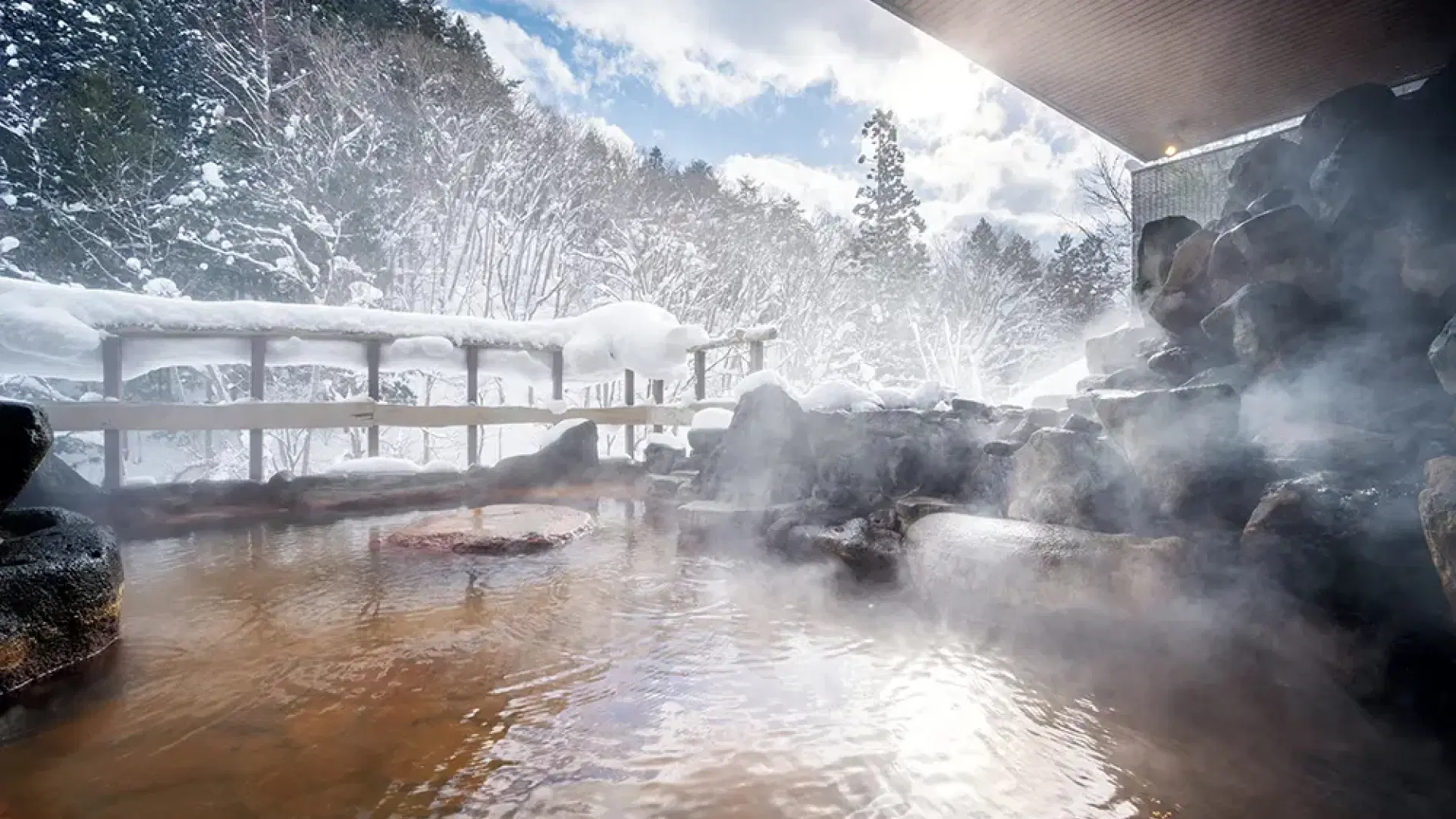
Different mineral types produce radically different experiences. A sodium bicarbonate spring, known as bijin no yu or "beauty's water," leaves the skin silky and smooth. A sulfur spring is prized for its effects on skin conditions. An iron-rich spring tints the water amber and leaves a subtle metallic warmth.
Water does not perform. It does not try to impress. It simply is what it is, and the task of the great ryokan is to let it be exactly that.
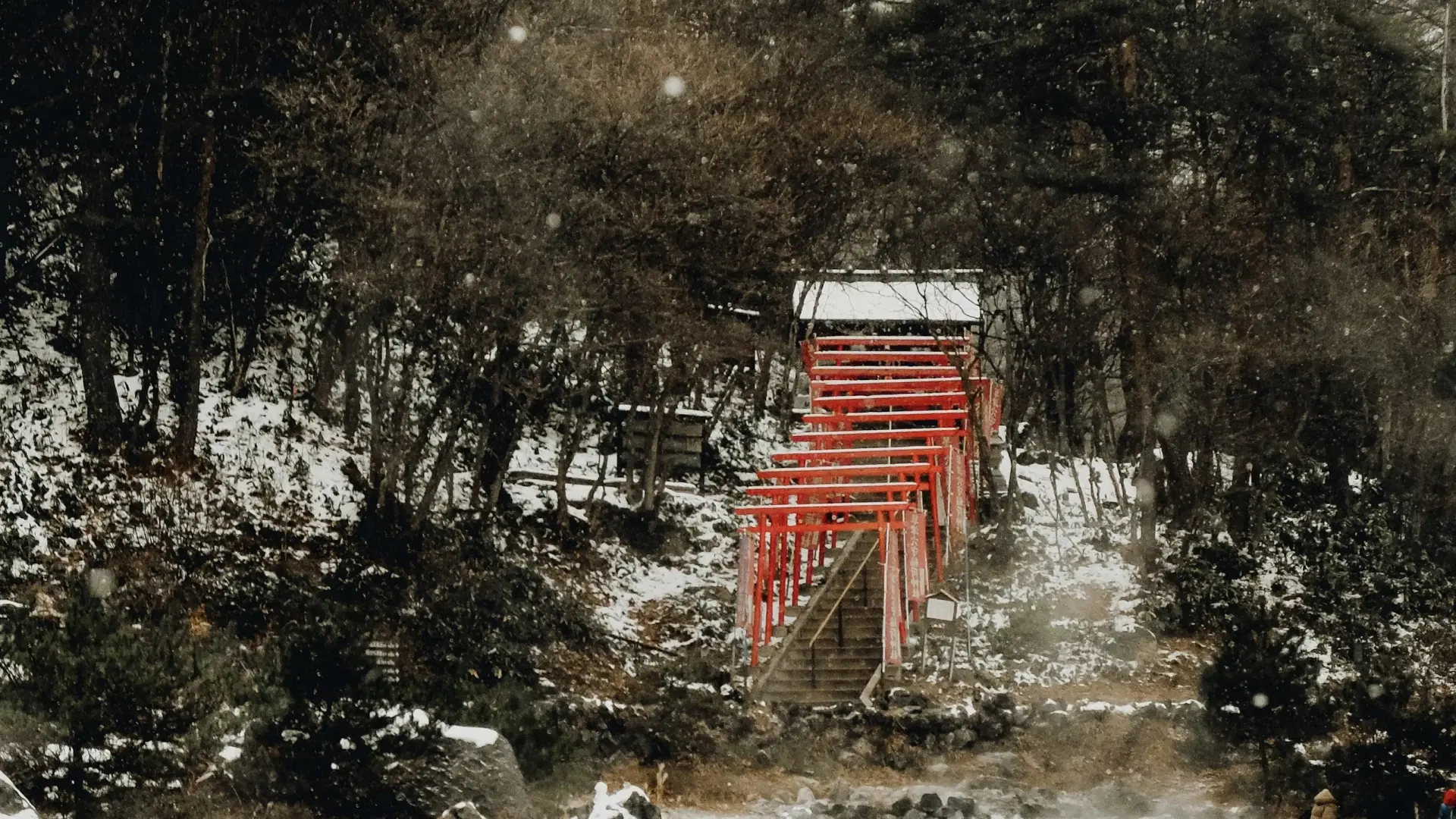
Imagine arriving at a mountain ryokan in northern Tohoku on a January evening. Snow is falling steadily. After settling into your room, you follow a stone-flagged corridor toward the bath. You enter the water — 42 degrees, sulfuric, with a slight milky opacity. The warmth is immediate and enveloping.
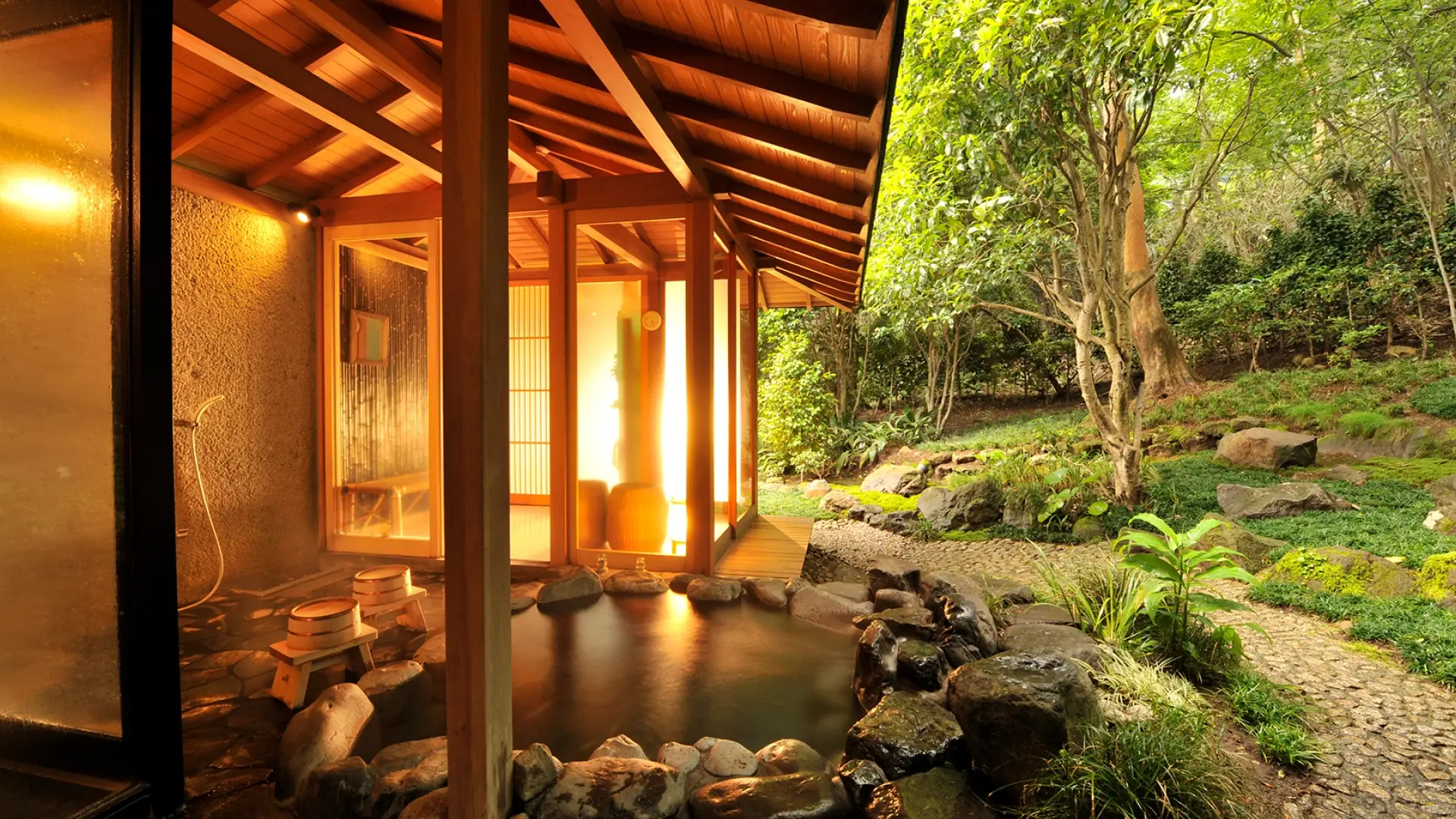
After ten minutes, you push through a wooden door to the rotenburo. Snow is falling into the bath, each flake dissolving on contact with the steaming surface. The tub is carved from a single boulder, positioned so your view extends across a valley of snow-laden cedars. The contrast between the heat of the spring and the cold of the winter air creates a sensation of absolute presence.
In a kakenagashi bath, water enters fresh from the spring and overflows continuously, ensuring every bather is immersed in water that has not been shared, filtered, or chemically treated. You can see the water entering at one end and overflowing at the other — the tub is never still.
Guests evaluating onsen quality should begin with the water itself. Touch it — high-mineral waters feel different from tap water. Smell it — sulfur springs are immediately identifiable, while subtler mineral profiles reveal themselves as faint metallic or alkaline notes. Great onsen water leaves a physical impression that lasts for hours: unusually soft skin, deeply relaxed muscles, noticeably deeper sleep.