Kurayoshi
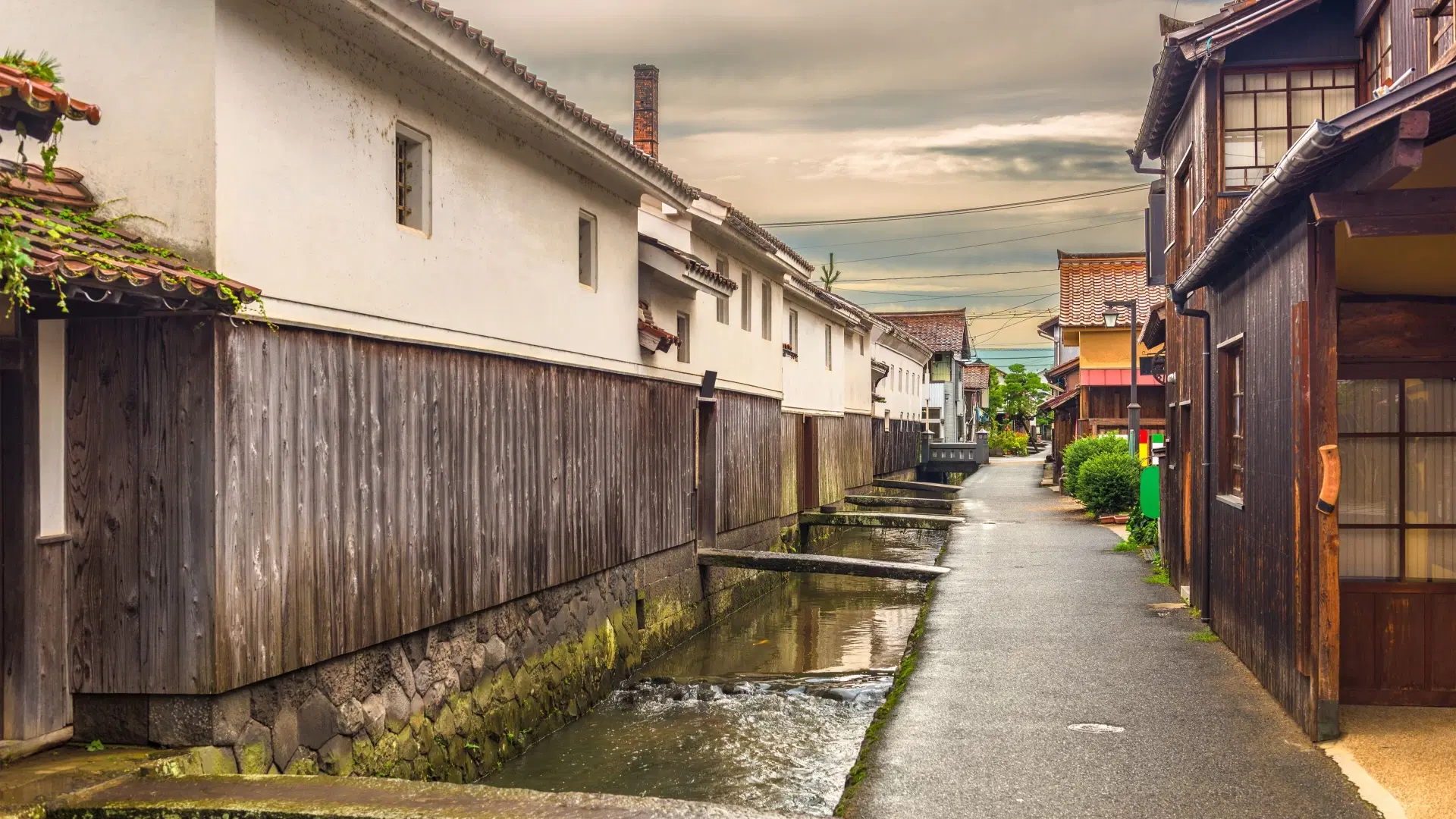
倉吉Kurayoshi is a town of white walls and red roofs, its identity preserved in the Shirakabe Dozo district where a canal lined with storehouses and merchant residences from the Edo and Meiji periods creates a streetscape of quiet, photogenic beauty that has survived the modernization that erased similar quarters in most Japanese towns. The white plaster walls that give the district its name, their surfaces marked by the characteristic black lattice of namako-kabe, the diamond-patterned tile cladding that protected earthen walls from fire and weather, reflect in the canal water below with a clarity that doubles the visual effect and creates a symmetry between architecture and reflection that Japanese aesthetics have prized since the garden designers of the Heian period first understood the beauty of mirrored form.
The town sits in the fertile plain between the Japan Sea coast and the volcanic massif of Mount Daisen, whose imposing profile dominates the western horizon and whose presence shapes the climate, the agriculture, and the spiritual geography of the entire region. The Daisen connection is more than scenic: the mountain's volcanic soils and abundant water, filtered through layers of ancient lava and pumice, provide the ingredients for the agricultural abundance that historically sustained Kurayoshi's merchant class and continues to define the town's culinary character. The relationship between mountain and town is one of dependence and gratitude, the prosperity of the plain a direct gift of the volcano's geological legacy.
Kurayoshi's scale, small enough to traverse on foot in an hour yet dense enough to sustain discovery through a full day of exploration, makes it an ideal destination for the traveler who prefers the intimacy of a provincial town to the complexity of a city. The Shirakabe Dozo district, the surrounding temple quarter, the local craft workshops, and the food markets that reflect the agricultural richness of the Daisen foothills compose a portrait of Japanese provincial life that is authentic not because it has been preserved as a museum but because it has simply continued, the rhythms of commerce and community and seasonal celebration persisting in forms that the Edo-period merchants who built these storehouses would recognize.
Highlights
The Shirakabe Dozo district is Kurayoshi's architectural treasure, a corridor of white-walled storehouses and traditional merchant residences that line both banks of the Tama River canal. The buildings, dating from the Edo through early Showa periods, demonstrate the construction techniques and aesthetic sensibilities of the merchant class that prospered here through trade in rice, cotton, and the products of the Daisen foothills. The namako-kabe walls, their diamond-patterned tiles set in raised plaster ridges, are both functional, the tiles shedding rain and resisting fire, and ornamental, their geometric regularity creating a visual rhythm that unifies the diverse buildings into a coherent streetscape. Several storehouses have been converted into shops, cafes, and galleries that integrate contemporary use with historical architecture, the old structures accommodating new purposes without losing the character that makes them worth preserving.
Mount Daisen, visible from Kurayoshi as a broad-shouldered volcanic profile that rises to 1,729 meters, offers both contemplative viewing from the town and active exploration for those who venture to its slopes. The mountain has been sacred since ancient times, its Daisenji temple founded in 718 as a center of mountain worship that fused Shinto reverence for natural peaks with Buddhist monastic practice. The approach to the temple through a forest of ancient beech trees, their canopy creating a green cathedral whose silence deepens with each step, is one of the finest forest walks in the San'in region. In autumn, the beech forests ignite in shades of gold and copper, and the mountain's lower slopes become a destination for foliage viewing that rivals the more famous sites of eastern Japan.
The Utsubuki Park, occupying the hillside above the town center, preserves the site of Utsubuki Castle with walking paths that wind through cherry trees, azaleas, and viewpoints overlooking the red-roofed townscape below. The park's spring display, when more than 4,000 cherry trees bloom simultaneously, is considered among the finest in the San'in region, and the contrast between the pale blossoms and the red roofs of the Shirakabe district visible below creates a composition that encapsulates Kurayoshi's identity as a town where natural beauty and human craft coexist in intimate proportion.
Culinary Scene
Kurayoshi's culinary tradition draws upon the agricultural wealth of the Daisen foothills and the marine resources of the nearby Japan Sea coast, a dual pantry that produces a table of surprising variety for a town of its size. Mochi shabu-shabu, thin slices of mochi rice cake swished through a rich dashi broth alongside seasonal vegetables and locally raised beef, is a regional specialty whose combination of textures, the yielding chewiness of the mochi against the tender meat and crisp vegetables, demonstrates the Japanese genius for transforming simple ingredients into compositions of harmonious contrast.
The town's proximity to Mount Daisen gives it access to water of exceptional purity, filtered through the mountain's volcanic geology over decades before emerging in springs and wells whose mineral content and softness are prized by sake brewers, tofu makers, and cooks. The tofu produced in Kurayoshi, particularly the silken varieties that showcase the water's quality most directly, achieves a delicacy of texture and a sweetness of flavor that transforms a humble ingredient into a culinary revelation. Local sake, brewed with Daisen water and rice from the surrounding plain, reflects the same mineral clarity, its flavor clean and precise.
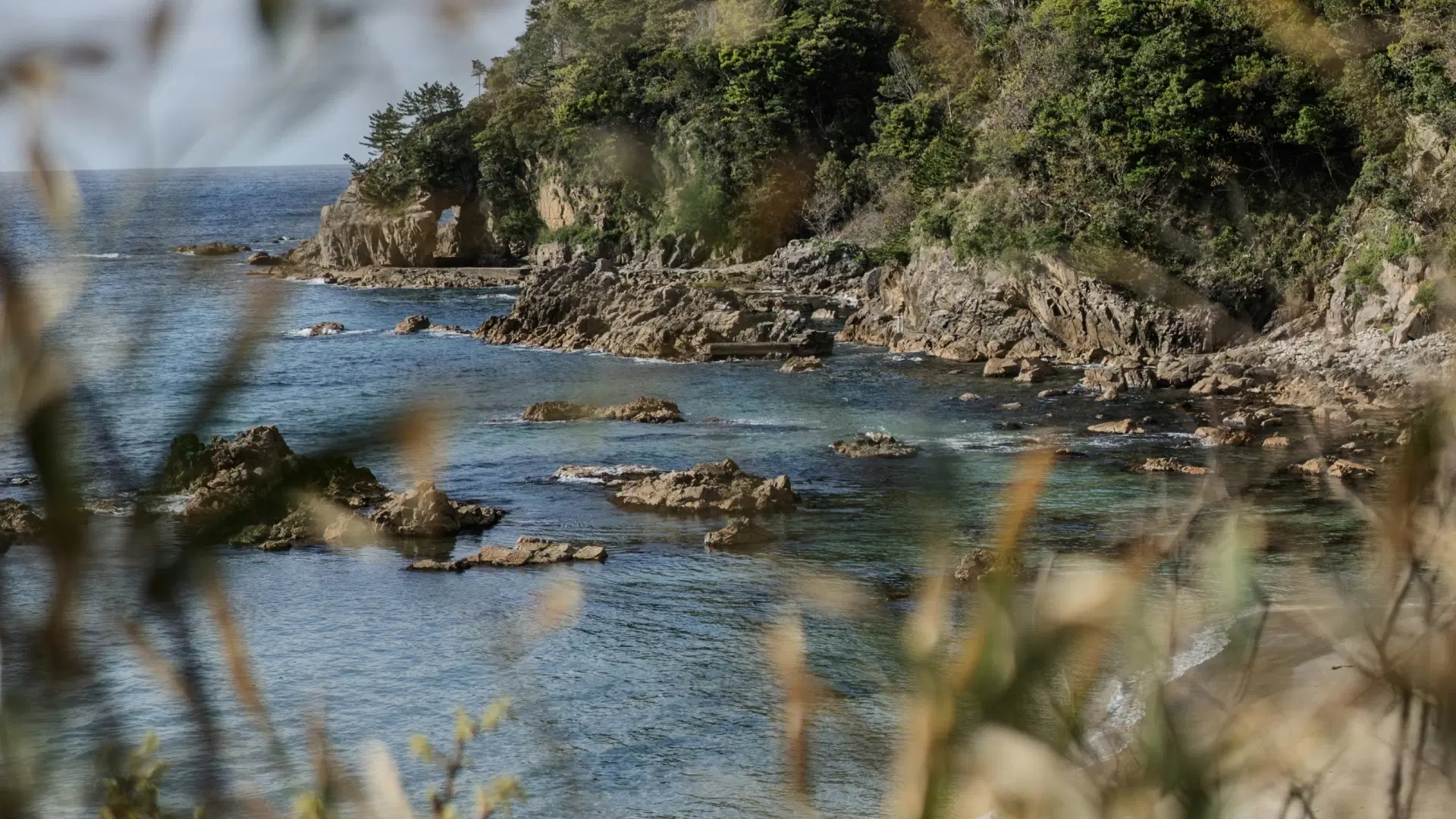
The Japan Sea coast, less than thirty minutes north, supplies the town's restaurants with the seasonal procession of fish and shellfish that defines San'in cuisine: matsuba crab in winter, shiroshita karei in summer, and the smaller species whose names vary from port to port but whose freshness, guaranteed by the brevity of the journey from boat to kitchen, is constant. Kurayoshi's dining establishments, modest in scale but serious in their sourcing, serve these ingredients with a directness that allows the quality of the raw material to dominate, the chef's role understood as curation rather than transformation.
Ryokans in Tottori
There are no ryokans in our guide listed in Kurayoshi. See our selection across Tottori.
View ryokans in Tottori