Kagawa
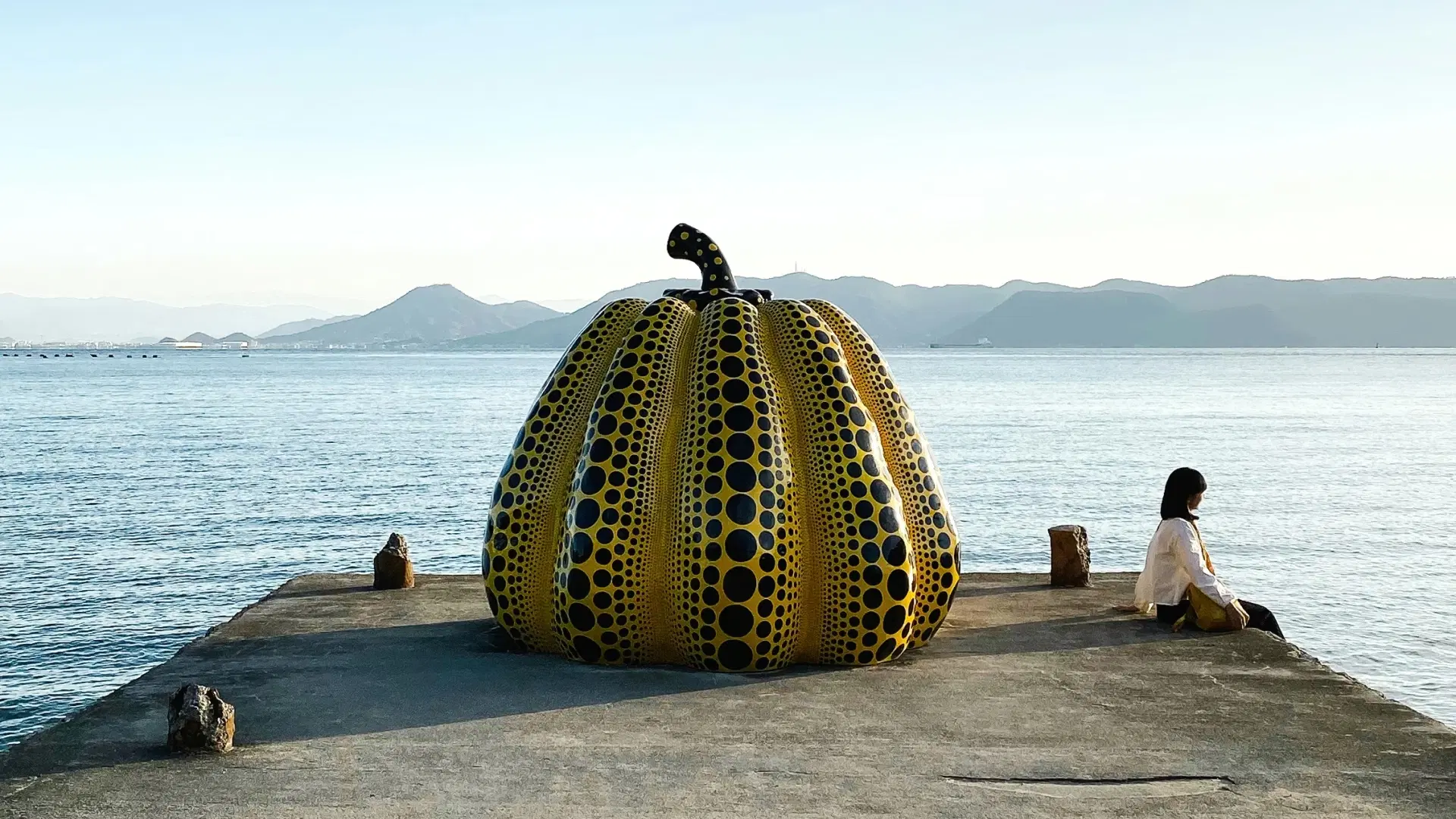
香川県Kagawa is Japan's smallest prefecture by area, a fact it wears not as a limitation but as a kind of compression, every square kilometer dense with purpose. The Seto Inland Sea defines its northern shore, scattering islands across calm waters that shimmer in light so particular that artists from around the world have been drawn to capture it. Naoshima, Teshima, and the islands of the Setouchi Triennale have become synonymous with a radical experiment: embedding contemporary art directly into the landscape and abandoned structures of fishing villages, creating encounters where a Tadao Ando museum sits beside a working rice paddy, and a James Turrell installation occupies a converted house on a hillside.
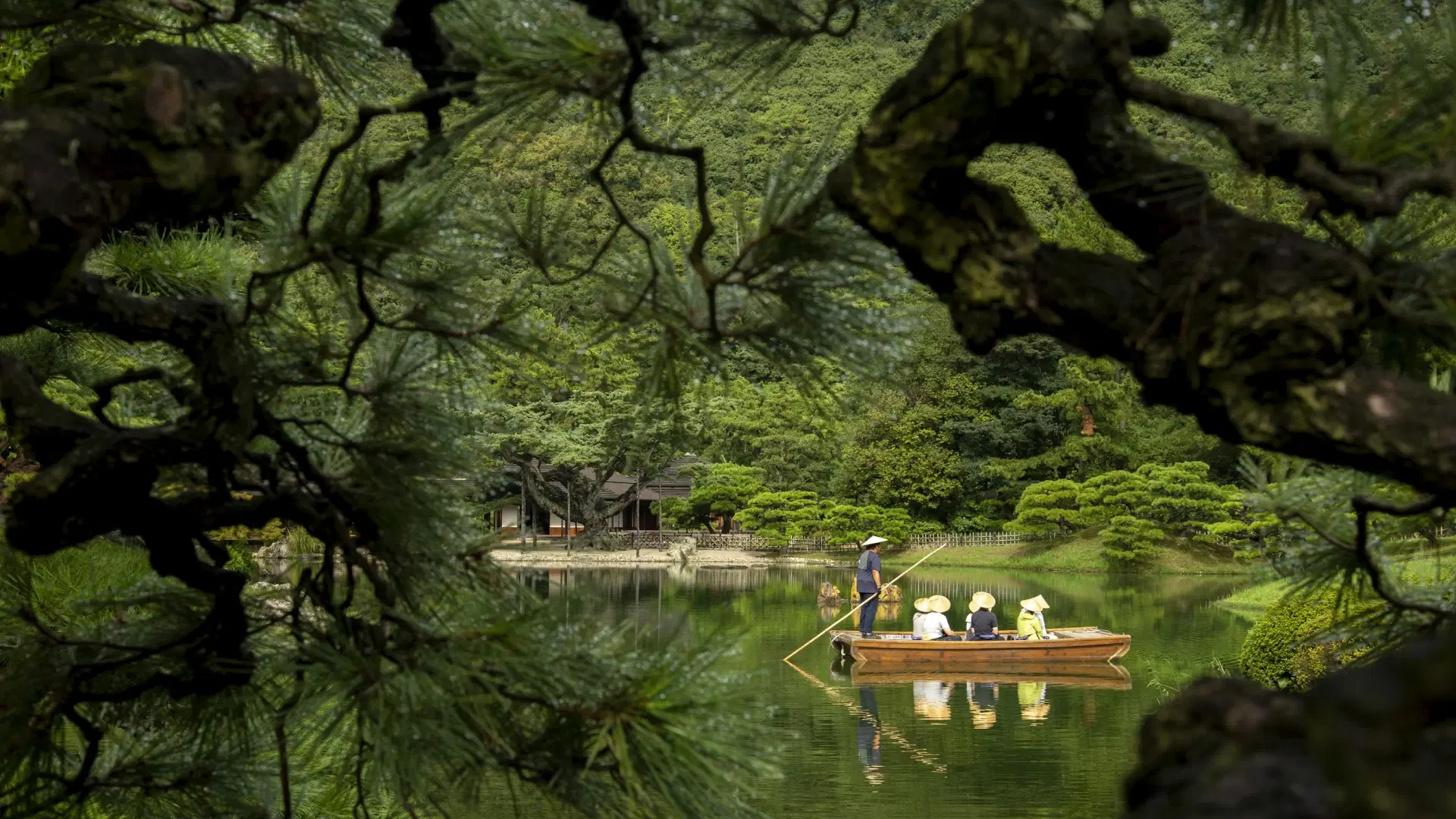
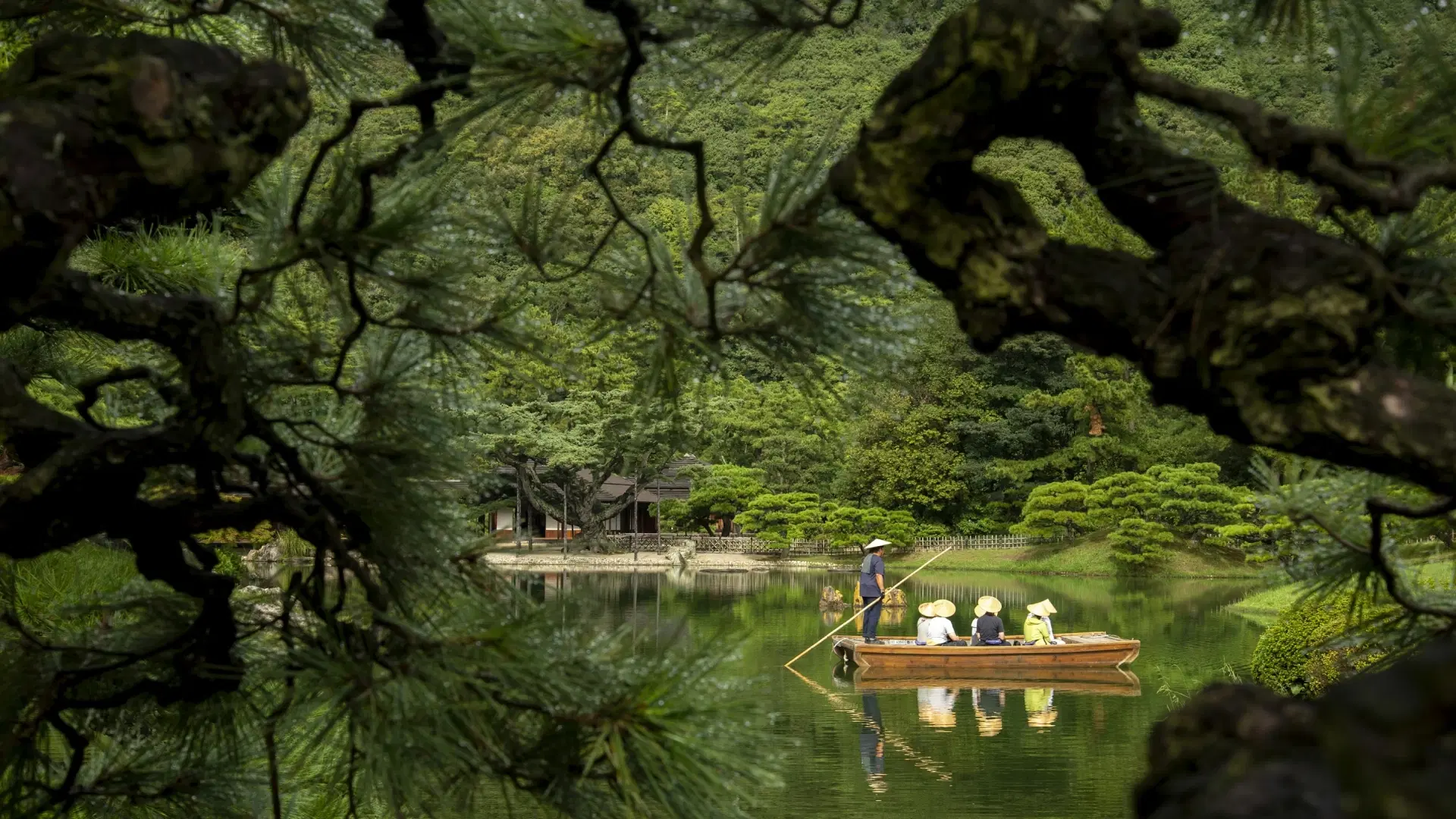
The capital, Takamatsu, faces this island-studded sea with an easy sophistication. Ritsurin Garden, begun by the local Matsudaira lords and completed over a century of refinement, is among the finest strolling gardens in Japan, its composition of pine-covered hills, lotus ponds, and teahouses set against the borrowed scenery of Mount Shiun. The garden predates and arguably surpasses many of its more famous rivals.
But ask any local what defines Kagawa and the answer will come before you finish the question: udon. Sanuki udon, handmade with locally milled flour and served in preparations ranging from the austere to the elaborate, is not merely a regional specialty but a civic religion. Tiny shops with no signage serve lines that stretch around the block. This is a prefecture that proves scale is irrelevant when the essentials are perfected.
Kagawa is Japan's smallest prefecture by area, a fact it wears not as a limitation but as a kind of compression, every square kilometer dense with purpose.
Cultural Identity
Kagawa's cultural landscape has been reshaped by the Setouchi Triennale, the international art festival held every three years across the Inland Sea islands. Naoshima's Benesse Art Site, conceived by Soichiro Fukutake and designed largely by Tadao Ando, has become one of the world's most significant intersections of art, architecture, and nature. Teshima Art Museum, a single concrete shell housing a floor of slowly pooling water, achieves a beauty that transcends category. On the mainland, Ritsurin Garden embodies the classical Japanese aesthetic of borrowed scenery and meticulous seasonal composition. Kotohira-gū, the hilltop shrine dedicated to maritime safety, has drawn pilgrims up its 1,368 stone steps for centuries. Kagawa's lacquerware tradition, Sanuki-nuri, produces pieces of refined simplicity that reflect the same aesthetic restraint evident in the prefecture's best udon bowls.
Culinary Traditions
Sanuki udon is Kagawa's defining culinary achievement, a noodle of extraordinary elasticity and chew produced by rigorous kneading and rolling of dough made with local flour and salt from the Inland Sea. The preferred style is deceptively simple: kamaage (fresh from the pot), kake (in hot broth), or bukkake (with cold dashi poured over). Shops range from self-service counters in converted garages to refined establishments, but the noodle itself must always satisfy that essential bounce. Shodoshima, the island east of Takamatsu, produces olive oil and soy sauce of remarkable quality, the former introduced from the Mediterranean over a century ago and now integral to the island's identity. Iriko dashi, the dried anchovy stock that forms the foundation of many Sanuki udon broths, is sourced from the Inland Sea. Wasanbon, a fine-grained sugar produced from local cane, appears in delicate confections throughout the region.
Waters & Onsen
Konpira Onsen, at the foot of the long staircase leading to Kotohira-gū Shrine, provides a natural resting point for pilgrims. The sodium bicarbonate springs soothe tired legs after the 1,368-step ascent, and several ryokan offer baths with views toward the sacred mountain. Shionoe Onsen, tucked into the mountains south of Takamatsu, offers a quieter retreat with simple alkaline springs in a forested setting that feels distant from the coast despite being less than an hour from the city. On Shodoshima, a handful of small onsen provide thermal bathing with Inland Sea panoramas, the islands and fishing boats visible from outdoor tubs. Kagawa's hot spring culture is modest in scale, suited to a prefecture where pleasure is found in small, well-considered gestures rather than grand spectacle.