Imabari
今治Imabari is a city defined by two forms of craft, one ancient and one modern, both expressions of the same regional instinct for making things with care. The first is towel-making: Imabari produces Japan's finest towels, their exceptional softness and absorbency the result of the pure water that flows from the mountains of Shikoku's interior, and the city's towel industry has elevated a utilitarian product into an object of genuine quality that has earned recognition far beyond Japan's borders. The second is cycling: Imabari is the Shikoku terminus of the Shimanami Kaido, the seventy-kilometer cycling and walking route that crosses the Seto Inland Sea via a chain of six islands and seven bridges, connecting Ehime Prefecture to Hiroshima in a journey that has been called the most beautiful cycling route in the world.
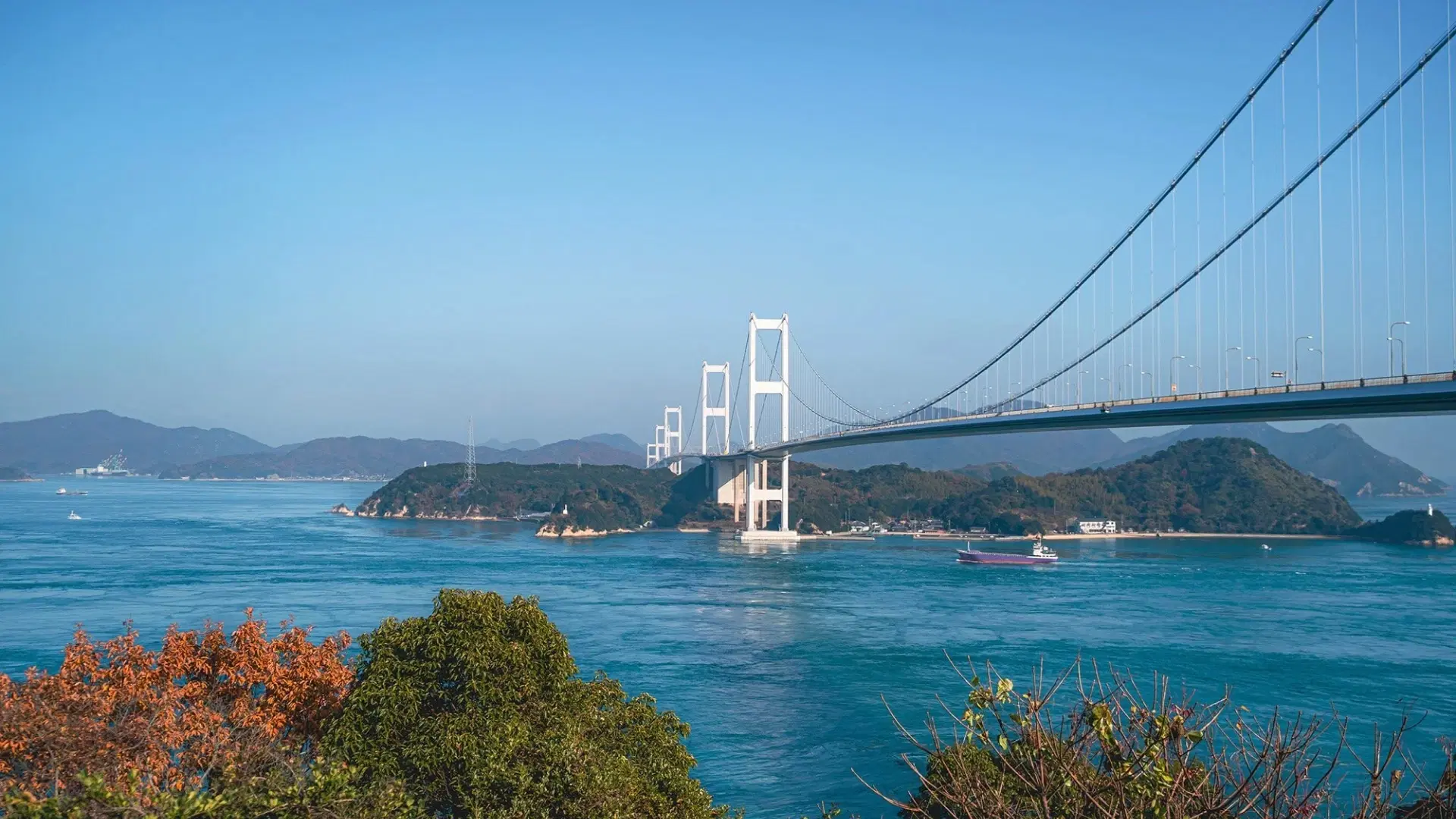
The city occupies the northeastern coast of Ehime, facing the complex archipelago of the Geiyo Islands across the narrow straits that separate Shikoku from the mainland. The maritime geography that historically sustained the city's shipping industry and naval traditions now provides the setting for the Shimanami Kaido's island-hopping route, and the experience of cycling across the great suspension bridges that link the islands, the Inland Sea spreading in every direction and the islands rising from its surface like green-shouldered hills, represents one of the finest outdoor experiences available in Japan.
Imabari's urban character is unpretentious, its streets organized around the harbor and the commercial district with the practical efficiency of a working city rather than the aesthetic self-consciousness of a tourist destination. But this modesty conceals a cultural richness that reveals itself to the attentive visitor: the towel museum that documents the craft with surprising depth, the castle ruins that preserve the city's feudal-era maritime heritage, and the proximity to island communities whose traditional ways of life offer a window into a Japan that the mainland cities have largely left behind.
Imabari is a city defined by two forms of craft, one ancient and one modern, both expressions of the same regional instinct for making things with care.
Highlights
The Shimanami Kaido is Imabari's defining experience, a cycling journey that crosses the Seto Inland Sea in a series of exhilarating bridge crossings and tranquil island passages. The route's seven bridges, each a feat of engineering whose scale becomes apparent only when you are on them, carry dedicated cycling and walking paths that are separated from vehicle traffic and that provide unobstructed views of the maritime landscape in every direction. The largest of the bridges, the Kurushima Kaikyo Bridge, stretches over four kilometers and is the longest suspension bridge in the world to incorporate a cycling path, and the crossing, high above the Kurushima Strait with its powerful tidal currents and busy shipping lanes, is a moment of suspended exhilaration that rewards every pedal stroke of the approach.
The islands between the bridges each possess a distinct character that makes the journey a series of discoveries rather than a single continuous ride. Oshima, the first island from the Imabari side, is known for its rose gardens and hilltop viewpoints. Hakatajima is the smallest and most intimate, its citrus groves and salt production facilities reflecting the traditional island economy. Omishima, the largest of the chain, houses the Oyamazumi Shrine, one of the most important Shinto shrines in western Japan, whose collection of armor and weapons, offered by warriors throughout the feudal era, constitutes the finest assemblage of its kind in the country.
Imabari Castle, a coastal fortress whose moats were filled with seawater from the nearby strait, stands at the city center as evidence of the domain's maritime orientation. The castle's stone walls and reconstructed keep provide views across the harbor to the islands of the Shimanami Kaido route, connecting the city's feudal past to its contemporary identity as the gateway to one of Japan's most celebrated journeys.
Culinary Scene
Imabari yakitori, the city's signature street food, defies the conventional understanding of yakitori as a chicken-on-skewers proposition. In Imabari, the chicken is not skewered but pressed flat on an iron griddle and grilled with a sweet, peppery sauce, then served skin-side up, the skin blistered and caramelized, the meat juicy beneath. The style is unique to the city and inspires the same local pride and competitive refinement that drives udon culture in neighboring Kagawa. The dozens of yakitori shops in Imabari's entertainment district each maintain proprietary sauce recipes and grilling techniques, and an evening spent sampling between them provides a concentrated education in the range of expression available within this seemingly simple format.
The seafood of the Kurushima Strait, where the tidal currents that flow between the Pacific and the Inland Sea reach their greatest velocity, produces fish and shellfish of exceptional quality. The tai, octopus, and small fish caught in these waters develop a firmness and depth of flavor attributed to the constant exertion of swimming against the current, and the sashimi served at Imabari's harbor-side restaurants, sliced from fish landed that morning, demonstrates the relationship between environment and flavor that defines the best of Japanese regional seafood.
The citrus orchards that cover the hillsides of the nearby islands contribute their fruit to the Imabari table in the form of fresh juice, ponzu, and the citrus-flavored sweets and preserves that fill the gift shops at the Shimanami Kaido terminals. The combination of cycling-sharpened appetite, ocean-fresh seafood, and sun-ripened citrus creates a culinary experience inseparable from the landscape that produces it.