Ehime
愛媛県Ehime occupies the northwestern face of Shikoku, a prefecture of castle towns and citrus groves that looks out across the Seto Inland Sea with a composure born of deep history. Matsuyama, its capital, is one of Japan's great literary cities, forever linked to Natsume Sōseki, who spent a year teaching here and transmuted the experience into "Botchan," a novel that affectionately satirized the town and inadvertently made it famous. Matsuyama Castle, one of only twelve original castles remaining in Japan, crowns the hilltop above the city, its keep offering panoramic views of the Inland Sea and the mountains beyond.
Beneath the castle, Dogo Onsen has been welcoming bathers for over 3,000 years, making it the oldest documented hot spring in Japan. The main bathhouse, Dogo Onsen Honkan, is a wooden confection of towers, tatami rest rooms, and communal baths that inspired the bathhouse in Miyazaki's "Spirited Away." Bathing here is not merely cleansing but temporal travel, an immersion in rituals that have persisted since the age of myth.
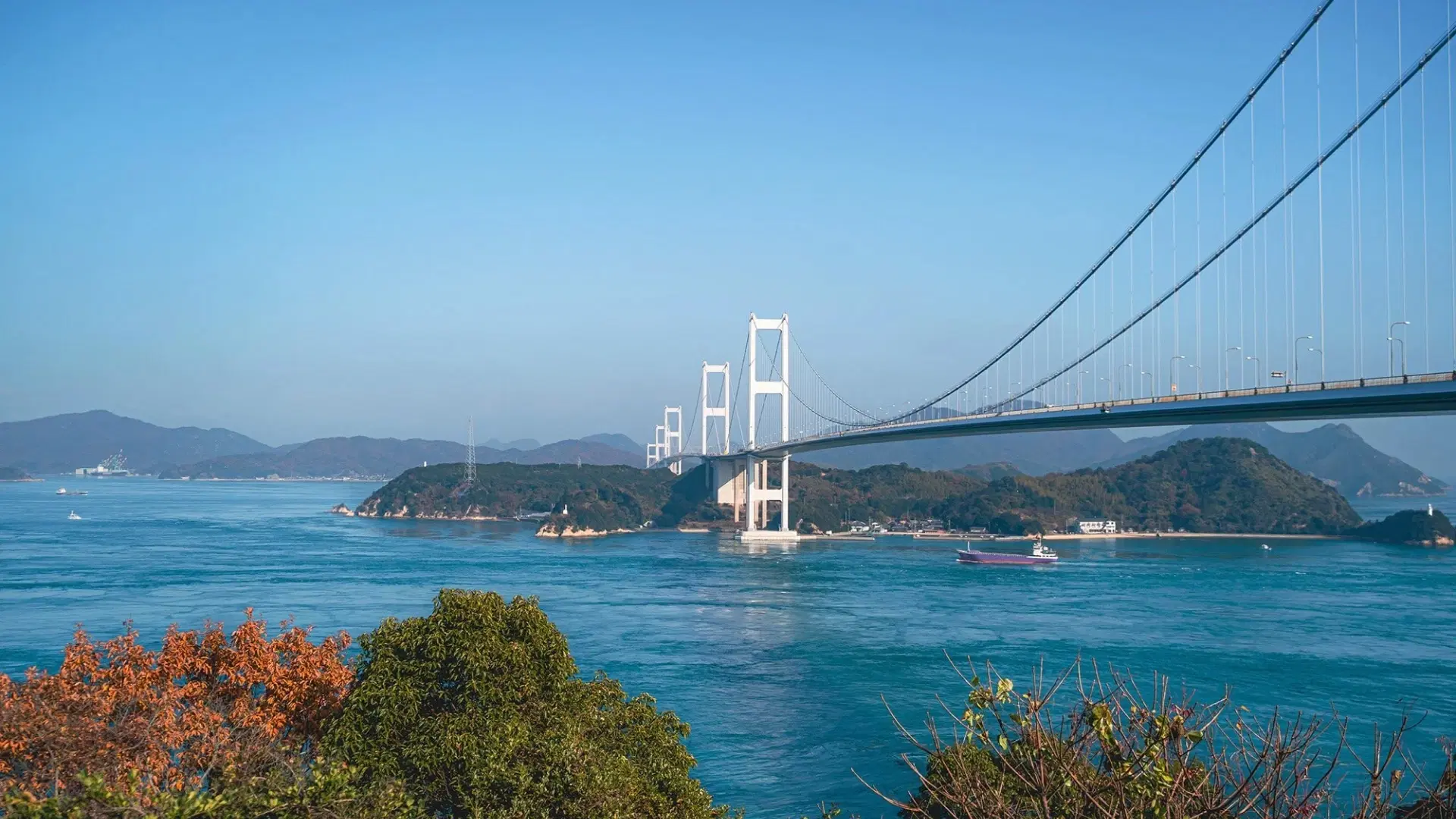
Beyond Matsuyama, the Shimanami Kaido, a 70-kilometer cycling route spanning six islands between Shikoku and Honshu, has become one of the world's great bicycle journeys. The route crosses suspension bridges with dedicated cycling lanes, offering views over the Inland Sea that shift with each island. Ehime's mikan orchards terrace the hillsides in every direction, their fruit sweetened by reflected sea light, producing a citrus so iconic it has become the prefecture's very identity.
Ehime occupies the northwestern face of Shikoku, a prefecture of castle towns and citrus groves that looks out across the Seto Inland Sea with a composure born of deep history.
Cultural Identity
Ehime's cultural identity weaves together literature, craft, and spiritual practice. Sōseki's year in Matsuyama left an indelible mark; the city celebrates him with a museum, a replica of the streetcar from "Botchan," and a literary festival. Shiki Masaoka, the haiku reformer who modernized Japan's most compressed poetic form, was also born here, and the Shiki Memorial Museum explores his revolutionary approach to observation. The Shikoku Pilgrimage passes through 26 temples in Ehime, the longest stretch in any single prefecture, and the walking henro in white remain a common sight on mountain paths. Tobe-yaki, the pottery of nearby Tobe, is distinguished by its white porcelain body decorated with indigo brushwork, a style that combines rustic warmth with graphic precision. Uwajima's bullfighting tradition, tōgyū, pits bull against bull in bouts judged not by violence but by technique and spirit.
Culinary Traditions
Ehime's mikan mandarins are synonymous with winter in Japan, their bright orange skins appearing in every household and train station from November through February. The prefecture grows more citrus varieties than any other, from the common unshu mikan to the intensely flavored dekopon and the blood-red variety from the Uwajima coast. Jakoten, a fried fish cake made from whole small fish ground and pressed, is Ehime's essential street food, its flavor concentrated and mineral. Taimeshi, sea bream over rice, comes in two distinct styles: in the south, sliced raw tai is dipped in a soy-egg mixture and laid over hot rice; in the north, the whole fish is cooked with the rice in an earthenware pot. Uwajima's pearled waters also produce excellent tai and other white-fleshed fish. Matsuyama's izakaya serve Ehime's local sake, brewed with soft mountain water and best paired with the sea's gifts.
Waters & Onsen
Dogo Onsen is Ehime's crown jewel and one of the most significant bathing sites in all of Japan. The Honkan, a three-story wooden structure built in 1894, offers communal baths on the ground floor and private tatami rest rooms above, where visitors are served tea and dango after bathing. The waters are simple alkaline springs, gentle on the skin, but it is the architecture and ritual that elevate the experience. The newly completed Asuka no Yu annex provides a modern complement with refined facilities and artistic interiors. Beyond Dogo, Tōon city's Okudogo Onsen offers mountain-set alkaline springs in a quieter atmosphere. Along the coast, the small onsen at Kashima and in the Shimanami Kaido islands provide post-cycling soaks with sea views. In Uwajima, the thermal springs are modest but perfectly suited to the slow pace of the southern coast.